

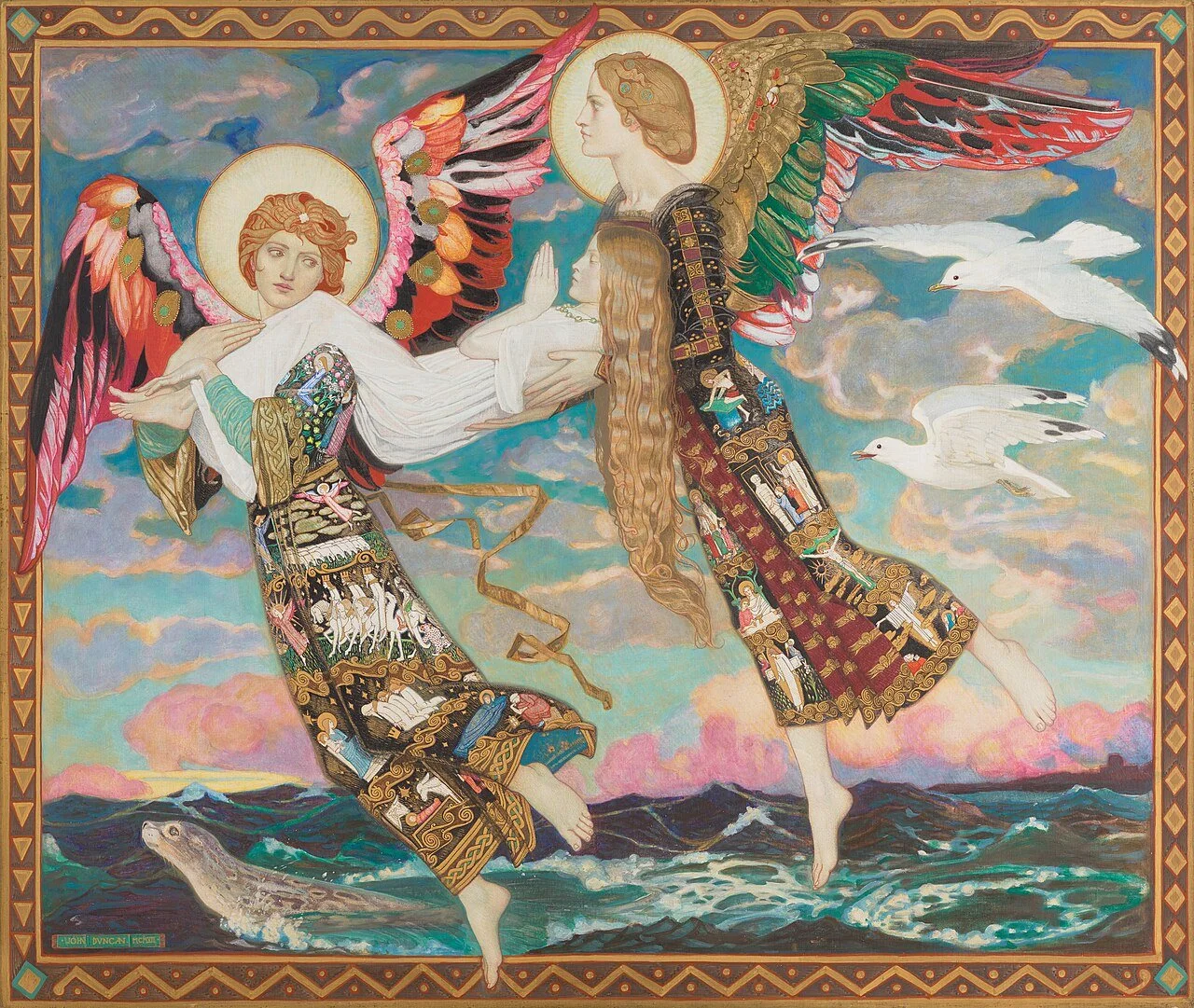
Some people enter our lives at the threshold, after one chapter has ended but before the next has begun…
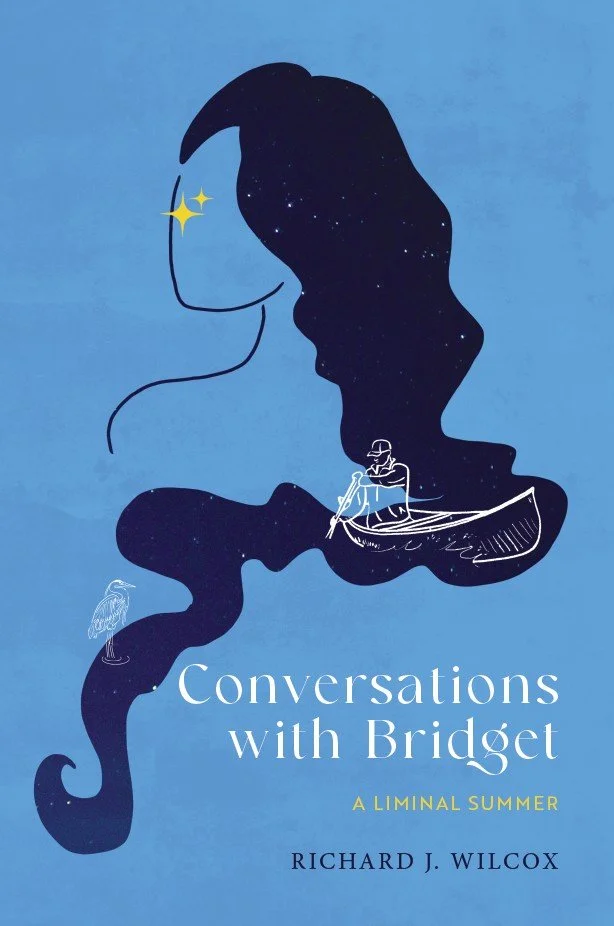
Conversations with Bridget
A Liminal Summer
In the summer of 2013, Richard is standing in just such a place. His marriage has ended, his life is in upheaval, and his future is uncertain. When he meets Bridget, he assumes she is simply another lonely human looking for companionship.
She is not.
Bridget asks questions no one else asks. She knows things she shouldn't know. Even her appearance seems to change. Moving effortlessly between humor and wisdom, she challenges Richard to rethink love, loss, faith, identity—and the nature of reality itself.
As their relationship deepens, Richard becomes increasingly determined to discover Bridget's true identity. But the more he learns, the more elusive she becomes. Perhaps the more important question is whether Richard can finally understand himself.
Blending romance, philosophy, spirituality, and wit, Conversations with Bridget: A Liminal Summer is a novel about the conversations that change us, the mysteries we cannot solve, and the relationships that help us become who we were meant to be.
A Conversation About Bridget
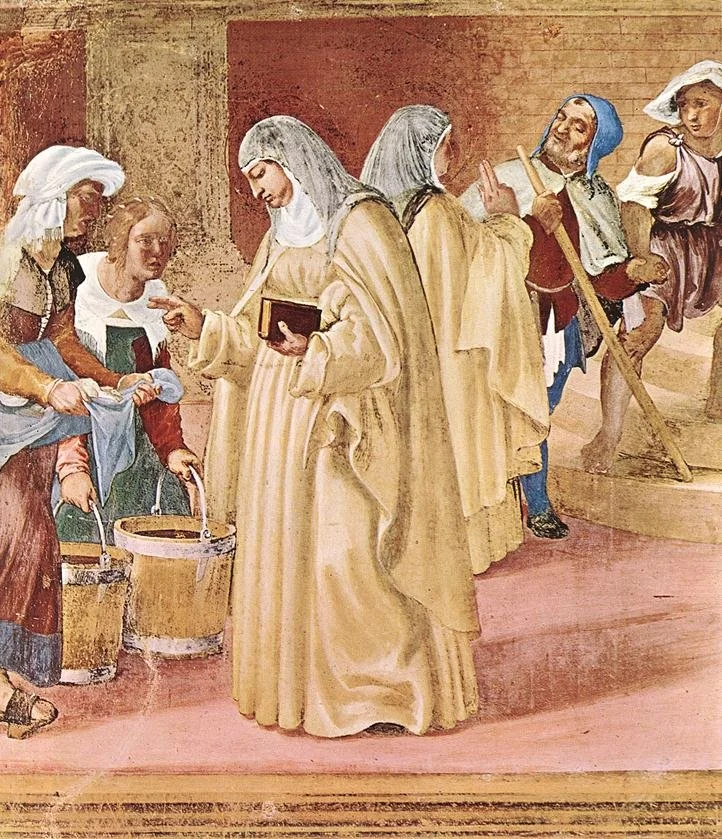
A 16th-century fresco by Lorenzo Lotto in the Suardi Chapel showing Brigid turning water into beer (left) and healing a blind man (right).
Q. Where did the name Bridget Cecilia come from?
A. Bridget is named after Brigid of Kildare, a fifth-century Irish abbess and one of the patron saints of Ireland. Among many traits that have been assigned to her over the centuries, some artists have found her to be a muse. She is also named after Cecilia of Rome, who lived in the third century. One of the things she is best known for is being a patron of musicians.
Q. Why is music so important to the story?
A. Music has always been an important part of my life. It has served as a source of inspiration. It has provided tremendous comfort during my most difficult times. It binds people together in community. It speaks to our minds and souls in ways that other forms of language can not.
Q. Why are real places like Merchant's Millpond, The Great Dismal Swamp, Somerton Friends Meeting, and False Cape State Park so important to the story?
A. Wilderness and sacred places are a theme in many literary works, serve key narrative roles in the Bible, and have been important in my own life too. As I was recalling the events of my life in 2013, I was remembering the physical places that were an important part of that story. Each of these places has its own story to tell and has been the setting of many fascinating stories over the years. I couldn’t discuss all of them in the book, but I did want to introduce the reader to each of them.
Q. Why did you write this as a novel rather than a memoir?
A. I thought it made for a much more interesting story. I did grow as a person through the months of 2013, but I find most of the details of what I actually did each day quite boring. What interests me more is the thought processes, the questions, the prejudices, and the obstacles that I had and struggled with. There are metaphors, such as Jacob wrestling with an angel, that spoke to me in a different way that summer. On one hand, it was an ancient story, but on the other hand it became extremely real for me.
Q. What does A Liminal Summer mean?
A. The word 'liminal’ comes from Latin. It literally means ‘threshold,’ but it comes from the same root as ‘limit’ which can mean boundary. In my life, the summer of 2013 marked an important threshhold; a boundary line. When I crossed over it, I was a different person.
Q. Who is Bridget?
A. Excellent question. Who do you think? I invite you to read the book and you can tell me.
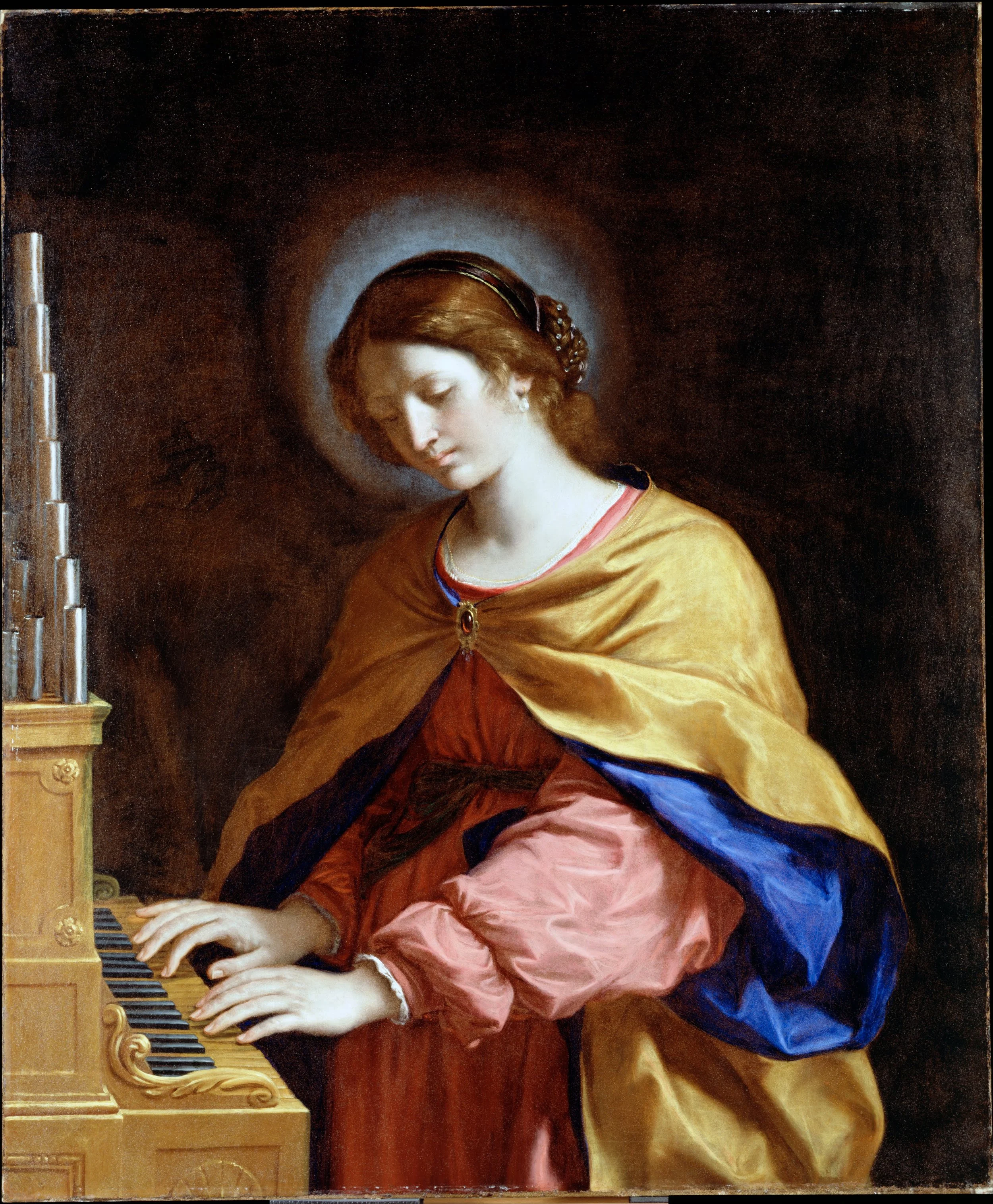
Saint Cecilia playing the pipe organ, by Antonio Franchi, 1749.